Use the 2027 FAQ to establish the edition
Tortuga’s official FAQ identifies April 2–4, 2027, and confirms both single-day and three-day admission. Other parts of the site retain 2026 headings or earlier lineup material, so check the year on the specific schedule, product or travel instruction you use. A familiar performer on an older homepage panel is not evidence for the new daily bill.1
Choose the length of visit through your actual music priorities and travel time. A single day can be a complete experience when you live within a workable journey; a three-day trip adds accommodation and repeated transport. Before buying flights, put the confirmed festival dates alongside the room’s check-in and checkout. Decide whether arriving the evening before would make the first day more relaxed, then compare that extra night with the risk of a rushed same-day arrival.
Understand the difference between the beach and the event
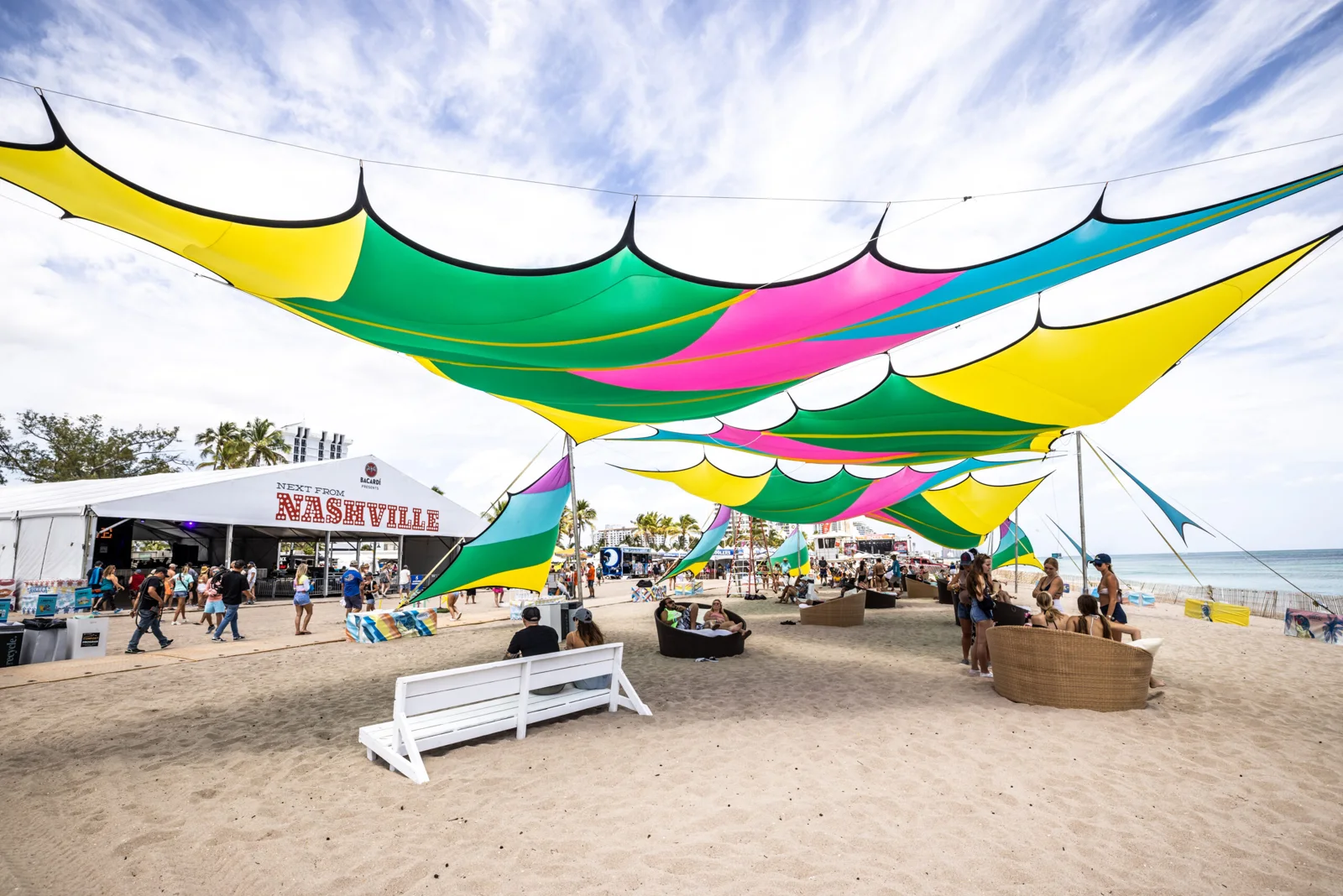
The organiser locates the festival at 1100 Seabreeze Boulevard in Fort Lauderdale. Its passes describe access to the controlled festival experience, including music, vendors and Conservation Village. A general beach visit and entry to those festival areas are separate activities governed by different conditions.23
Prepare a concert day bag rather than assuming every item useful on a beach is suitable for entry. Check current rules for containers, bags, chairs and personal equipment before leaving your accommodation. Plan your position for comfort as well as the stage view: repeated movement across sand can feel different from walking on pavement. People with mobility or sensory requirements should ask the organiser about their actual entrance and viewing route, rather than relying on a general description of the waterfront.
Three journeys before the first song
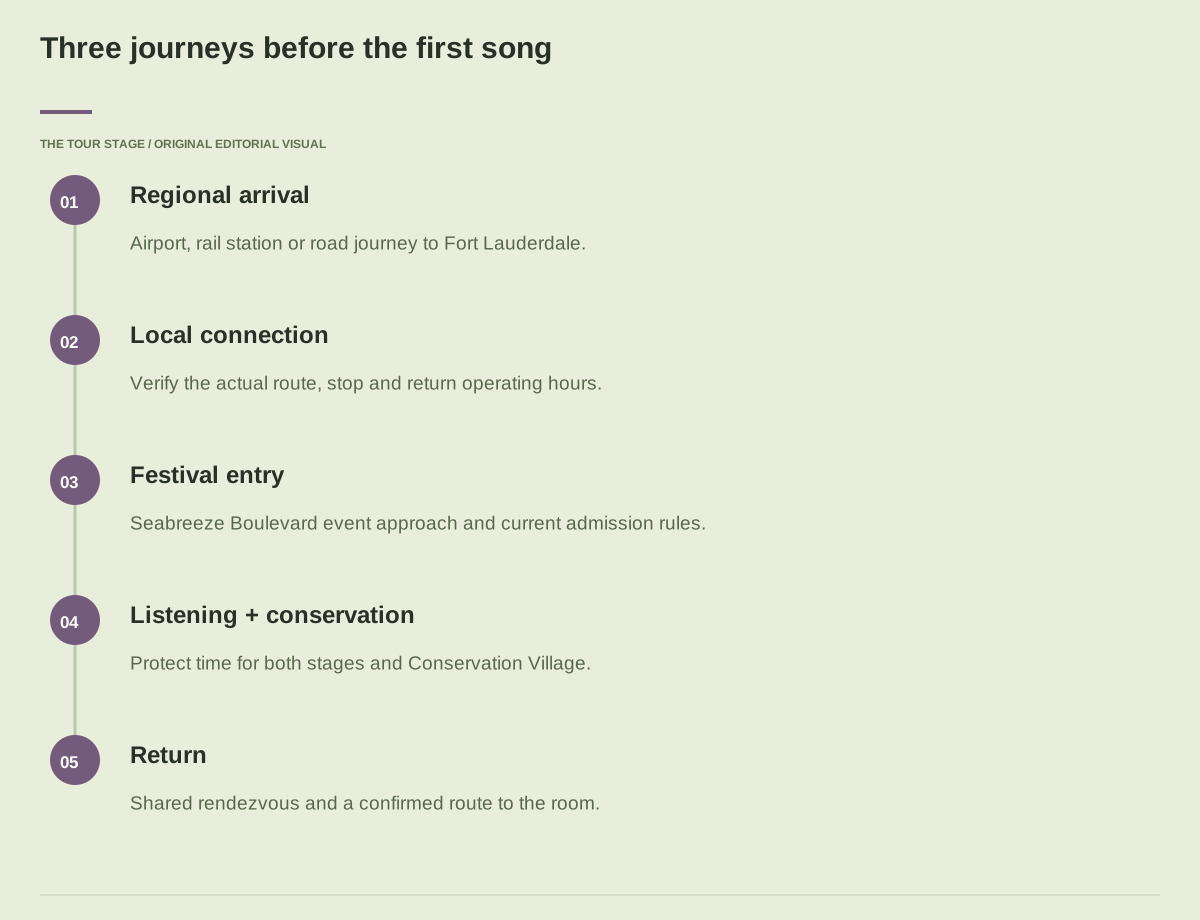
- Regional arrivalAirport, rail station or road journey to Fort Lauderdale.
- Local connectionVerify the actual route, stop and return operating hours.
- Festival entrySeabreeze Boulevard event approach and current admission rules.
- Listening + conservationProtect time for both stages and Conservation Village.
- ReturnShared rendezvous and a confirmed route to the room.
Read the visual as text
- Regional arrivalAirport, rail station or road journey to Fort Lauderdale.
- Local connectionVerify the actual route, stop and return operating hours.
- Festival entrySeabreeze Boulevard event approach and current admission rules.
- Listening + conservationProtect time for both stages and Conservation Village.
- ReturnShared rendezvous and a confirmed route to the room.
Make a transport chain rather than a station pin
The festival’s Getting Here page describes Water Taxi options and Brightline connections, while stating that there is no official festival parking. It retains an older edition footer, so treat it as the organiser’s transport framework and verify the event-specific service details before booking.2
A train ticket to Fort Lauderdale does not itself finish the journey to the sand. Draw the chain from your origin to the station, from the station to the festival and back after the final performance. For a boat service, establish the precise departure point, boarding arrangement and return window. If driving, identify a legal parking option and its operating hours; do not assume a nearby lot allows an all-night stay. Save the return route with the same care as the outbound route, especially if your group intends to separate during the music.
Keep city services distinct from festival transport
Fort Lauderdale’s official LauderGO information describes community shuttle, Water Trolley and Micro Mover services. Those are city mobility options, not an automatic promise of a dedicated Tortuga shuttle or an identical route to the commercial Water Taxi advertised by the festival. Use the city’s current service map and operating information for the route you actually intend to take.4
A useful local route must operate at the time you need it and reach a stop you can comfortably access. Check the final connection after the show, not just the afternoon service. If a route involves more than one provider, leave room between them and know the alternative if the first leg takes longer. A hotel listing’s phrase “close to transport” is only a starting point. Match the street address to the actual stop and consider the final walk with your day bag and tired feet.
Compare admission through facilities you will use
The official passes page provides the current categories and package descriptions; GA includes the festival’s Conservation Village, water refill stations and vendor access. Hotel packages are also offered. Compare a package with separately booked admission and accommodation using its full inclusions rather than a room rate alone.3
For an upgrade, write down the practical benefit you want: a particular permitted space, facilities or a calmer base between sets. Verify whether that benefit includes seating, food or beverages instead of inferring it from a premium name. In a group with different budgets, choose shared meeting points in areas everyone can enter. Keep refundable deposits separate from final spending while including them in cash needed upfront. The festival dashboard can compare these options with the reader’s own prices.
Build a sand-to-room comfort plan
A beach festival creates a particular sequence of transitions: paved approach, controlled entrance, sand, standing for music and the journey back through town. Pack and dress for that sequence rather than for a static afternoon on a beach towel. Use footwear you can walk in comfortably and keep any additional items within the current entry rules. If you need to change or store something, establish where that will happen before reaching the gate.
Plan the meal that comes before your longest listening block. A group that waits until everyone is hungry can spend its best interval debating vendors and lose a discovery set in the process. Let people make different food choices while maintaining one specific meeting time. Include water and a rest in the plan without requiring everyone to follow the same pace. The person who wants a break should know where the others will be later, so taking care of comfort does not feel like leaving the weekend behind.
At night, use the route home you prepared earlier and give each person the room address independently. A final performance can be exhilarating and still leave tired feet for the connection afterward. If your first return reveals a difficult walk or an awkward transfer, adjust the remaining evenings while there is still time. A little flexibility after real experience is better than treating the original itinerary as a test of endurance. The setting remains enjoyable when the practical transitions are simple enough to fade into the background.
Give Conservation Village real time
Rock the Ocean presents Conservation Village as its signature on-site feature and connects the festival to ocean-awareness and fundraising work. Its current page explicitly references the April 2–4, 2027 edition. This is a specific part of Tortuga’s identity, not simply a scenic description of a music event by the water.5
Visit while you have enough time to ask a question rather than only passing through between two stages. Choose one subject that interests you, such as habitat protection or research, and listen to the organisation explaining its own work. Avoid treating every conservation statement repeated on a festival graphic as a universal scientific fact. The most useful takeaway is a concrete activity or organisation you can investigate after the weekend. Leave the site as carefully as you would want to find it, keeping your own belongings and waste out of the sand.
Make the music work with the setting
For a beach-weekend listening route, compare the communal choruses of Kenny Chesney, the vocal ease of Darius Rucker and the melodic construction of Jordan Davis. These are listening references, not a substitute for the actual 2027 lineup. Explore the confirmed names through their recordings before choosing your stage priorities.
Pick one full discovery set, one shared group performance and one flexible interval each day. Listen for how an artist shapes the crowd’s attention in an outdoor space: a quieter verse, a band break or a chorus everyone recognises. The road-trip listening route can help prepare the journey, while the discovery guide can make an unfamiliar performer more approachable. Protect a meal between anchors so that your best listening time does not become a search for food.
End each day with a clear rendezvous
Choose a specific meeting point that remains usable when the crowd is leaving, and agree how long you will wait before following the fallback plan. Do not depend on a vague stretch of beach or on everyone spotting the same moving vehicle. Keep transport details and the accommodation address available to each person, not only the group organiser.
Add departure, meals, conservation time and the return journey to the weekend planner. Review the first evening’s actual journey before repeating it. The best Tortuga itinerary keeps the beach setting, the musical bill and ocean conservation in the same frame while leaving enough practical space for rest. You should finish with new music and a clear memory of the place, rather than a collection of missed connections.
Sources & further reading
- Tortuga official FAQApril 2–4, 2027; single-day and three-day admission; source-year distinction.
- Tortuga Getting HereSeabreeze Boulevard location; Water Taxi/Brightline framework; no official festival parking; older footer acknowledged.
- Tortuga passesAdmission categories, hotel packages and shared GA facilities.
- City of Fort Lauderdale LauderGO servicesCity mobility modes; distinct from commercial event transport.
- Rock the Ocean Conservation VillageOn-site conservation programme and explicit 2027 Tortuga dates.