A guitar that changes the chord beneath the note
The familiar country sound is not simply a guitar sliding upwards. A pedal-steel player can pick several strings, hold the bar in one place and change selected pitches while other pitches remain steady. The ear hears the relationship between notes change in real time. That is why a short steel response can feel unusually close to a human voice: the destination arrives through an audible journey.
The Country Music Hall of Fame’s instrument history places pedal steel within a longer steel-guitar story, rather than treating it as an instrument that appeared fully formed in Nashville.1 For a listener, the useful distinction is mechanical. A steel bar sets the sounding string length; pedals and knee levers operate changes in string tension. Neither part replaces the other. Their combination makes the instrument’s particular kind of moving harmony possible.
Reading the instrument from the player’s chair
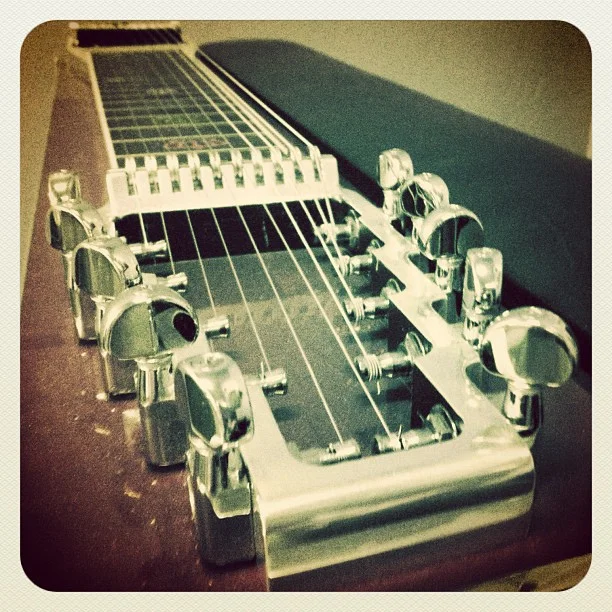
Picture the strings stretched horizontally across a cabinet on legs. The left hand holds a solid steel bar above them; it does not press strings against frets as a conventional guitarist does. Markings beneath the strings provide position references. The right hand plucks, usually with thumb and finger picks, and also helps stop unwanted vibration.
Foot pedals connect through rods to the pitch-changing mechanism. Knee levers provide additional changes without requiring another foot. A separate volume pedal controls loudness; it is not the same thing as a pitch pedal. Layouts differ between instruments, so a diagram should label these functions without pretending every model has an identical tuning, number of necks or pedal assignment. Watch the player’s knees during a held chord: a movement that looks tiny from the audience can produce the phrase’s most expressive change.
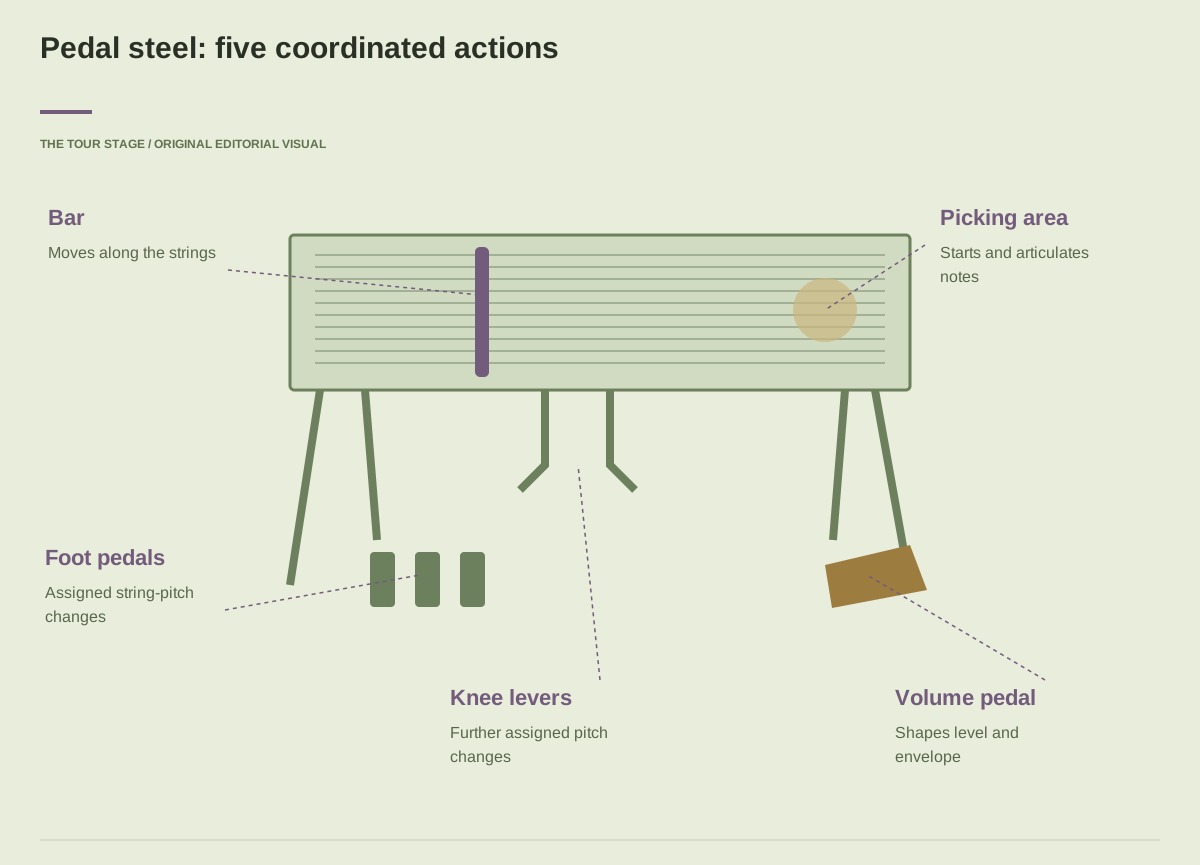
Pedal steel: five coordinated actions
- Steel barLeft hand sets sounding length above the strings.
- Picking handPlucks strings and helps mute unwanted vibration.
- Foot pedalsRods operate selected string-pitch changes.
- Knee leversAdditional selected pitch changes.
- Volume pedalSeparate control shapes loudness, not tuning.
- Position markersVisual references beneath strings; the bar does not fret them.
Read the visual as text
- Steel barLeft hand sets sounding length above the strings.
- Picking handPlucks strings and helps mute unwanted vibration.
- Foot pedalsRods operate selected string-pitch changes.
- Knee leversAdditional selected pitch changes.
- Volume pedalSeparate control shapes loudness, not tuning.
- Position markersVisual references beneath strings; the bar does not fret them.
Why a note seems to bloom
A picked string normally starts strongly and then decays. A steel player can use volume control to soften that initial attack and shape the remaining sound. The result may feel bowed or breath-like even though the string was plucked. Amplification, touch and the instrument’s construction also affect how long a note remains audible; the volume pedal does not create endless energy by itself.
Try listening for three separate events: the beginning of the note, the movement of pitch and the disappearance of the sound. A bright, clearly picked introduction can reveal all three. A sustained background part may hide the attack while making pitch movement conspicuous. The same player can move between those approaches within one song. Calling every steel part a mournful glide misses the clipped rhythms, quick single-note lines and deliberately abrupt endings that give the instrument much of its range.
Bud Isaacs and the importance of Slowly
Webb Pierce’s “Slowly” is a particularly useful historical starting point because Bud Isaacs’s contribution is documented in his own museum oral history. The archive discusses the recording session and his approach to pedals, providing a firmer basis than a vague claim that one record invented all steel guitar.2
Listen to the steel as a musical event rather than a special effect. Ask which notes seem to move and which provide an anchor. Then notice how the phrase makes a chord change feel inevitable. You do not need to identify the tuning to hear that relationship. Avoid turning this into a contest to find the earliest possible pedal on a recording: a documented influential performance and an absolute first are different historical claims. The record is valuable because the musical idea remains easy to hear.
Paul Franklin beside Vince Gill
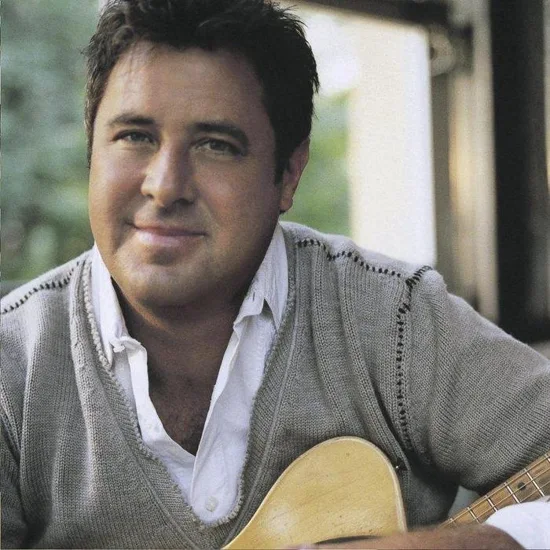
The jointly billed Bakersfield album by Vince Gill and Paul Franklin gives the instrumentalist unusually clear visibility. MCA identifies it as a collaboration drawing on Buck Owens and Merle Haggard repertoire.3 Start with “Together Again” and compare the steel’s role during singing with its role between vocal passages.
Our listening interpretation is that the restraint matters as much as the movement. A sustained answer can extend the emotional meaning of a vocal line without competing with its words. A quicker passage can change the energy while preserving the song’s outline. Credit Franklin as the named collaborator rather than treating the sound as an anonymous Nashville ingredient. That habit becomes especially useful when exploring records by Midland or Zach Top: check the particular release credits before assigning a familiar steel sound to a particular player.
Fills, pads and the conversation around a singer
A fill occupies a gap: the singer stops and the steel answers. A pad supplies a longer harmonic background. A solo temporarily takes the foreground. Those are arrangement roles, not fixed settings on the instrument, and a sensitive performance can move through all three without announcing the transition.
To hear the distinction, follow the singer’s breaths. If the steel repeatedly enters just after a phrase ends, it is helping organise the conversation. If it continues beneath the vocal, ask whether its register or sustained shape leaves the words enough space. In a busy chorus, its most effective contribution may be one held harmony. In a quiet verse, two moving notes may become the central texture. For a comparison of how other instruments share that space, use the fiddle guide and the country-band instrument map.
A three-pass listening exercise
Choose one of the records above and resist the urge to follow every instrument at once. On the first pass, identify only steel entrances and exits. On the second, listen for motion: a slide of the whole bar, a smaller change inside a chord, or a note that stays still while its neighbour moves. On the third, return attention to the singer and ask what the steel makes the sentence feel like.
A live video can help, but camera edits are not proof of who played on a studio master. Keep performance evidence and recording credits separate. You also do not need to decode every mechanism to enjoy the result. The point of knowing about bar, pedals, knee levers and volume control is to hear more deliberately. Pedal steel becomes distinctive through coordinated choices about pitch, touch and silence, not simply because a player can bend a note farther than a conventional guitarist.
Sources & further reading
- Country Music Hall of Fame and Museum: instrument historyMuseum explanations of country instruments and documented players.
- Bud Isaacs oral historyFirst-person archive covering pedals and the Webb Pierce Slowly session.
- MCA: BakersfieldVince Gill and Paul Franklin album collaboration and repertoire.