
Compare the room before comparing the prestige
Venue type describes a useful starting shape, not a guaranteed level of intimacy or sound quality. An arena often wraps tiered seating around a floor. An amphitheatre commonly places a stage before rising outdoor seating, sometimes with a lawn. A dance hall may combine performance, standing and dancing in a comparatively open room. Individual buildings depart from these patterns, and a tour’s production can change them further.
Begin with your own priorities. Do you need an assigned place? Do you want to dance? Would weather uncertainty make the evening stressful? Are steps, long walks or prolonged standing difficult? A famous building can still be the wrong fit for a particular visit. An ordinary room can be ideal if its arrangement suits you. The point is to match the event’s actual configuration to the kind of evening you want.
Arena: the floor and the bowl are different experiences
An arena’s lower and upper tiers create elevation above the floor, often making the stage shape easier to read from a distance. Floor sections can place you nearer to the action but may offer less elevation over other people. Neither option wins automatically. A central distant view and a close side view emphasise different things.
Bridgestone Arena’s accessibility page identifies accessible and companion seating on its levels, including the floor when an event offers floor seats.1 That is a specific feature of this venue, not a promise about all arenas. Use the event map to check the stage position, floor zones and any production obstructions. A basketball or hockey layout is not an adequate substitute. For artists such as George Strait, the production arrangement on the night matters more than a generic claim that a named section is always best.
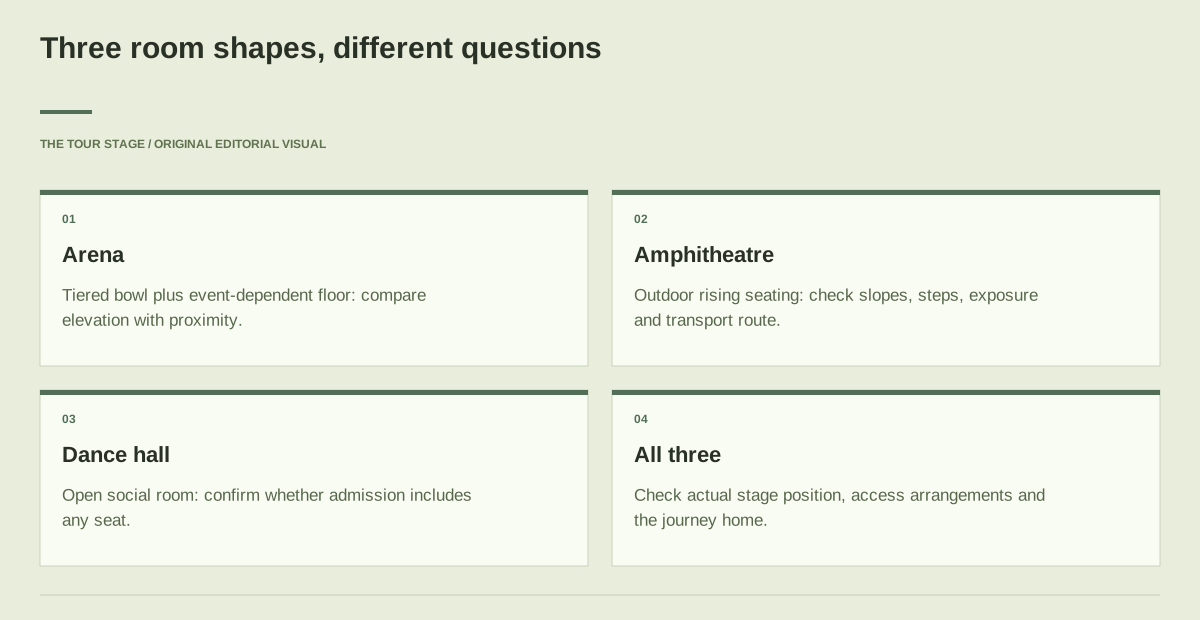
Three room shapes, different questions
- ArenaTiered bowl plus event-dependent floor: compare elevation with proximity.
- AmphitheatreOutdoor rising seating: check slopes, steps, exposure and transport route.
- Dance hallOpen social room: confirm whether admission includes any seat.
- All threeCheck actual stage position, access arrangements and the journey home.
Read the visual as text
- ArenaTiered bowl plus event-dependent floor: compare elevation with proximity.
- AmphitheatreOutdoor rising seating: check slopes, steps, exposure and transport route.
- Dance hallOpen social room: confirm whether admission includes any seat.
- All threeCheck actual stage position, access arrangements and the journey home.
Amphitheatre: topography is part of the ticket
An outdoor amphitheatre can offer a strong sense of place and more visible changes of light and weather. It can also involve exposed routes, slopes, steps or a walk from parking that is not obvious on a seat map. Covered seats should not be assumed to make every part of the visit weatherproof. The journey between transport, entrance, concessions and your place still matters.
Red Rocks provides a particularly concrete example: its official accessibility page identifies wheelchair-accessible seating in rows 1 and 70, with arrangements linked to the ticket purchased.2 That distinctive layout should not become a template for other amphitheatres. Read the page for your building, then ask about the route you will actually use. The accessibility questions guide helps turn “outdoor seating” into a more precise discussion of surfaces, distances and services.
Dance hall: admission may not buy a seat
A dance-hall setting can make the relationship between band and audience feel direct, but the label does not guarantee either a chair or an empty dance floor. Gruene Hall’s FAQ states that admission does not guarantee seating or dance space and that ticketed shows are generally standing unless noted otherwise.3 That is a useful real example of why the event description matters.
For a Randy Rogers Band listening trip, decide whether movement and a shared floor are part of the appeal. If sitting is essential, confirm a suitable arrangement before booking rather than relying on an optimistic early arrival. A visible table in a photograph might belong to another event configuration. Read the general-admission guide to separate unreserved seating from standing admission. The atmosphere can be rewarding when you choose it deliberately; it is less enjoyable when a ticket’s physical meaning comes as a surprise.
Weather and comfort change the whole visit
Think about the conditions from arrival until departure, not only during the headline set. An outdoor evening may move from sun to cold, while an indoor arena can require a long outdoor queue or walk. Layers, permitted water arrangements and comfortable footwear should follow the venue’s rules and your own needs. Avoid packing from a generic festival list when you are visiting a compact indoor room.
For an amphitheatre show by an artist such as Kenny Chesney, check the actual event information rather than assuming that an outdoor concert has relaxed item rules. For a dance hall, consider how much standing you are comfortable with and whether a quieter break is available. The practical comparison is not rugged versus comfortable. Each venue has different transitions and demands; a little planning makes those demands easier to assess before they become the defining feature of your evening.
Sightlines and sound are related to more than distance
Distance changes how much detail you can see directly. Elevation changes what stands between you and the stage. An overhead screen can supplement the view, but you should not assume every event uses screens or that they remain visible from every angle. A close seat may favour one side of the production; a farther position may reveal the whole stage picture.
Sound also depends on the system, mix and room, so a venue type alone cannot guarantee an ideal listening position. Avoid numerical seat scores with no supporting measurement. The more useful approach is to read restricted-view warnings, examine an event-specific map and describe your priorities in ordinary language. The seat guide develops that process. If a particular view or access feature is essential, ask the box office a concrete question tied to a section and event, rather than asking whether all seats are good.
A three-choice decision you can explain
Choose an arena if the particular map, assigned seating options and indoor performance environment fit your priorities. Choose an amphitheatre if its outdoor setting appeals and its routes and conditions work for you. Choose a dance hall if its actual admission arrangement suits how you want to listen and move. These are editorial decision prompts, not promises about an entire building category.
Before paying, finish this sentence: “I chose this ticket because it gives me…” The answer might be a reserved place, a wide stage view, a shorter route or a shared dance-floor experience. If you cannot finish it without relying on an unverified assumption, investigate that point first. Then use the first-concert planning guide to complete the rest of the evening. A well-matched room can make the same artist’s music feel newly vivid, whether the setting is large, outdoors or close to the band.
Sources & further reading
- Bridgestone Arena accessibilityAccessible and companion seating across arena levels and event floors.
- Red Rocks accessibilityVenue-specific accessible rows and arrangements; reviewed November 2026.
- Gruene Hall FAQGeneral admission does not guarantee a seat or dance space.