Twang describes an impression, not a complete recipe
Twang is useful shorthand for a bright, sharply defined guitar sound, often with a springy quality around the note. It does not specify one instrument, pickup, amplifier or technique. A player’s touch can make the same equipment produce a clipped rhythmic answer or a rounded melodic phrase. A recording’s mix also changes what reaches the listener.
Start by separating the beginning of the sound from what follows. Is the pick attack conspicuous? Does the note fade quickly or remain present? Does it stay clean or acquire a rough edge? These are observations you can make without guessing at equipment. They also make comparisons fairer. Two records can both sound twangy while using very different arrangements, and a heavily driven guitar can still articulate a country-shaped phrase. Genre is not a setting on an amplifier.
Brad Paisley puts the guitar in the foreground
Brad Paisley’s official site hosts an account of Play, his guitar-centred album, making it a useful starting place for listeners who usually follow only the vocal.1 Try “Turf’s Up” beside “Cliffs of Rock City” and describe the difference in attack and texture before reaching for genre labels. Our listening comparison is qualitative, not a claim about the exact gear used on either session.
With instrumental music, notice how a line finds its identity. A crisp opening can establish the character before a long run begins. Accents, pauses and repeated shapes make technical playing intelligible as a musical sentence. Paisley is useful here because the guitar is part of the stated artistic idea, not an incidental detail under the singer. That still does not make every sound on a multi-player recording his personal performance; track-level credits matter when several guitarists participate.
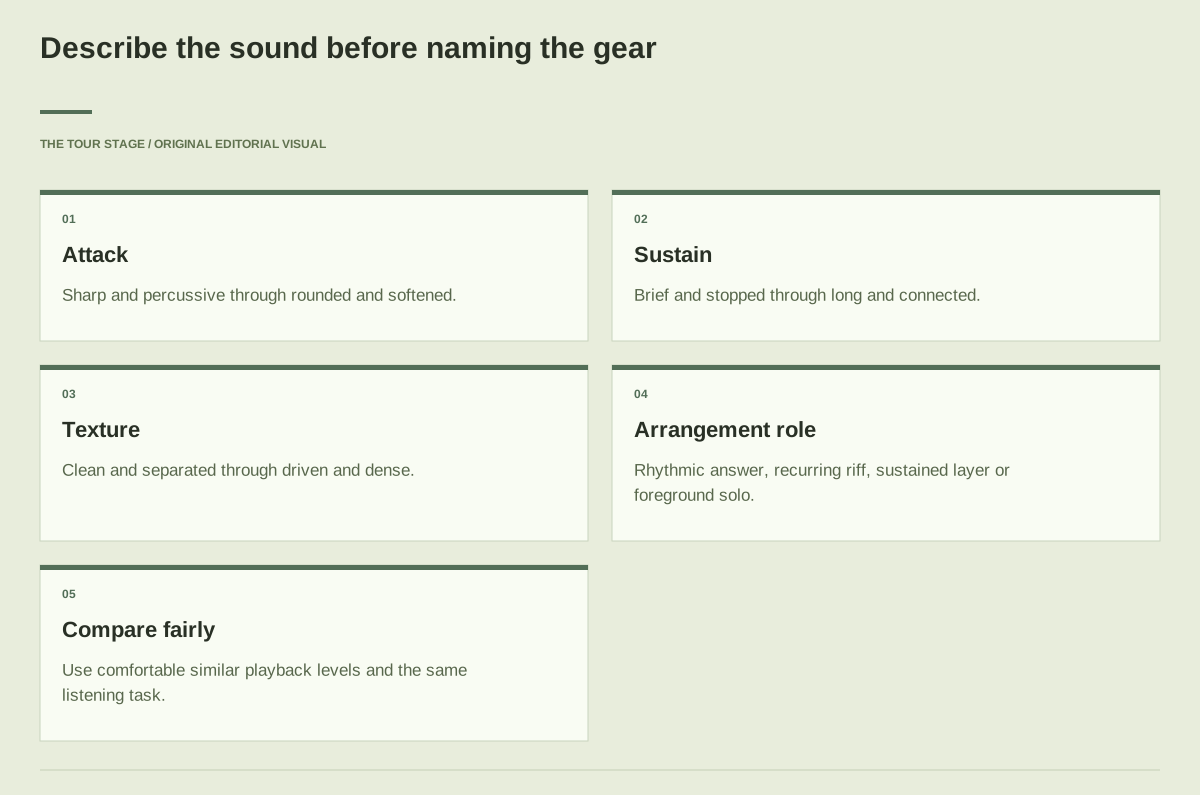
Describe the sound before naming the gear
- AttackSharp and percussive through rounded and softened.
- SustainBrief and stopped through long and connected.
- TextureClean and separated through driven and dense.
- Arrangement roleRhythmic answer, recurring riff, sustained layer or foreground solo.
- Compare fairlyUse comfortable similar playback levels and the same listening task.
Read the visual as text
- AttackSharp and percussive through rounded and softened.
- SustainBrief and stopped through long and connected.
- TextureClean and separated through driven and dense.
- Arrangement roleRhythmic answer, recurring riff, sustained layer or foreground solo.
- Compare fairlyUse comfortable similar playback levels and the same listening task.
Keith Urban: a guitar part inside a broader production
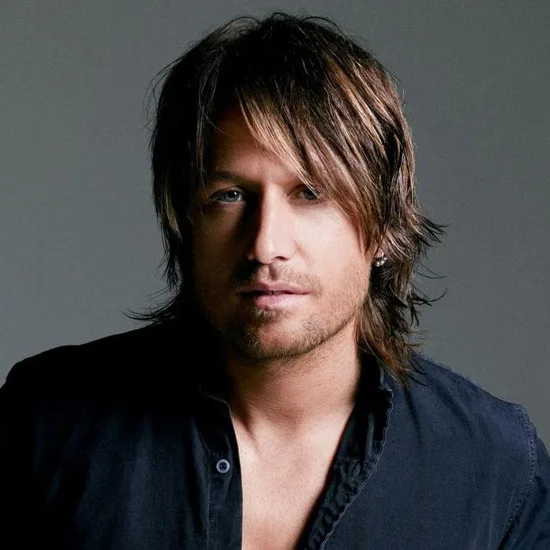
Keith Urban’s official Ripcord release provides another listening context.2 Start with “Wasted Time” and hear the guitar in relation to the beat and the chorus rather than trying to extract an isolated tone. A part may contribute a repeating shape, a lift into the vocal or a sustained layer behind other sounds.
Our editorial distinction is between a guitar-centred showcase and a guitar part serving a full production. Neither is inherently more authentic. A bright attack may cut through a dense texture; a broader sustained line may help a chorus feel larger. Listen for the point where the guitar enters and what changes when it stops. If the record’s credits name several instrumentalists or producers, keep those contributions separate. The presence of a guitarist on the cover does not identify the source of every guitar layer in the final mix.
Drive changes more than loudness
Overdrive and distortion add harmonic complexity and can change the apparent sustain and edge of a sound. They are not synonyms for simply turning a clean recording up. A driven chord can merge into a thick texture; a more lightly played note may remain comparatively clear. The player’s touch and the arrangement affect whether the result feels forceful, ragged or smooth.
Compare a short single-note response with a ringing chord in the same track. The chord combines several pitches, so its texture may become more complex as drive increases. That helps explain why a southern-rock passage can feel physically broad even when it contains relatively few notes. Do not assume that the most aggressive passage uses the most expensive equipment or the highest volume in the room. A finished master is a product of playing, recording and mixing, and it rarely allows a reliable reverse-engineered shopping list.
The ensemble explains the tone’s meaning
The Country Music Hall of Fame’s instrument history provides context for electric guitar among the changing instruments of country music.3 The listening lesson is that guitar tone means something in relation to its neighbours. A clipped line above steady bass and drums may feel lean; the same brightness in a dense group of guitars may be one edge inside a much larger texture.
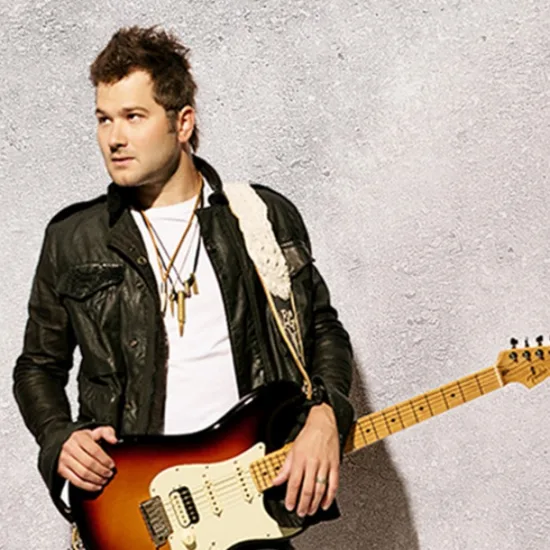
Explore Ben Gallaher with that question in mind: is the part establishing a riff, supporting the vocal or temporarily becoming the lead voice? Use official audio or a clearly credited performance before making specific personnel claims. A riff is a repeating musical figure, not a synonym for distortion. A clean guitar can play a powerful riff, and a driven guitar can supply a delicate response. The musical role often explains the listener’s reaction better than the equipment label.
Country and southern rock share a vocabulary
Bends, slides, open strings and rhythmic repetition can appear in country, blues and rock guitar. A bend changes a pitch by moving the string; a slide connects positions along it. Those techniques do not belong exclusively to one genre. What distinguishes a passage is their phrasing, emphasis and relationship with the groove.
Try hearing a bend as a vocal gesture. Does it arrive quickly at a target note or take time to settle? Does the player release it, repeat it or leave a space afterwards? Then hear a chordal riff as a rhythmic statement. Does the band strike together or create tension between parts? Those questions make the bridge towards country rock clearer. For a comparison with an instrument that moves pitches differently, read the pedal-steel guide; a guitar bend and a pedal-steel chord change can sound related while using different physical mechanisms.
Make a useful three-track comparison
Choose one Paisley instrumental, one Urban production and one official Gallaher performance. Keep playback at a comfortable level and avoid judging a track merely because it is louder. Write down attack, sustain and density using ordinary words. Sharp, rounded, brief, ringing, sparse and layered are more informative than declaring a tone good or bad.
Then add one sentence about function. A short sharp answer may make a verse conversational; a sustained line may connect sections; a repeated riff may give the whole song its identity. Treat the resulting spectrum as your listening map, not a scientific scale or ranking of artists. No percentage of twang can capture the effect of a well-placed phrase. Continue with flatpicking to hear how acoustic attack solves related musical problems, and with record production to distinguish the player’s contribution from the finished record’s wider construction.
Sources & further reading
- Brad Paisley: PlayArtist-hosted account identifying the guitar-focused album; musical observations here are editorial.
- Keith Urban: RipcordOfficial album and listening entry point.
- Country Music Hall of Fame and Museum: instrument historyMuseum explanations of country instruments and documented players.