Begin with the floor
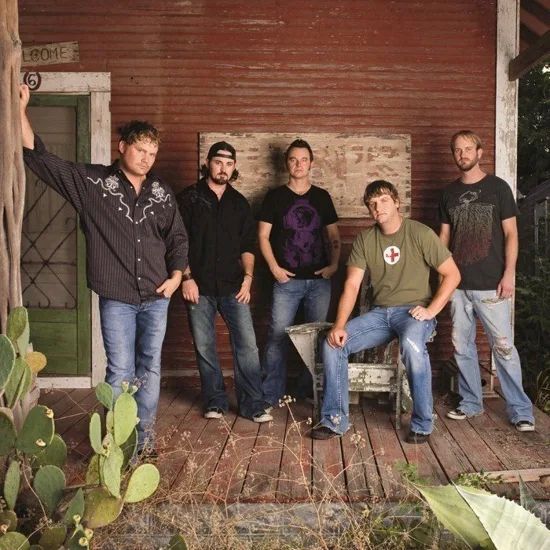
Dance music has a practical architecture. A clear pulse helps partners move together; an instrumental introduction gives them time to join the floor; a predictable ending lets a turn resolve. None of that makes the music simple. A singer can delay a syllable while the bass keeps the beat dependable, and a steel guitarist can introduce harmonic tension without disorienting dancers. Start a dance-hall listening session with those relationships rather than asking whether a band qualifies as traditional. Randy Rogers Band, Jon Wolfe and Wynn Williams offer different entry points into country music that can reward attention to both vocal personality and the working rhythm underneath it. Their inclusion here does not imply a current booking at any particular hall.
Gruene: a surviving building in a wider historic district
Gruene Hall’s history belongs to the history of Gruene itself. The town’s official historical account describes the hall’s survival and Pat Molak’s purchase during the area’s revival; the Texas State Historical Association supplies additional context on the building and its musical role. The important visitor distinction is between a historic dance hall and the format of a particular ticketed show. A busy standing concert can leave a different amount of dancing space from an afternoon performance. Read the event listing and ask what the room setup will be before deciding whether the evening suits a first dance lesson or an uninterrupted concert listen. Historic reputation tells you why a place matters. It does not reserve an empty floor around you.12
Illustrated dance-hall anatomy
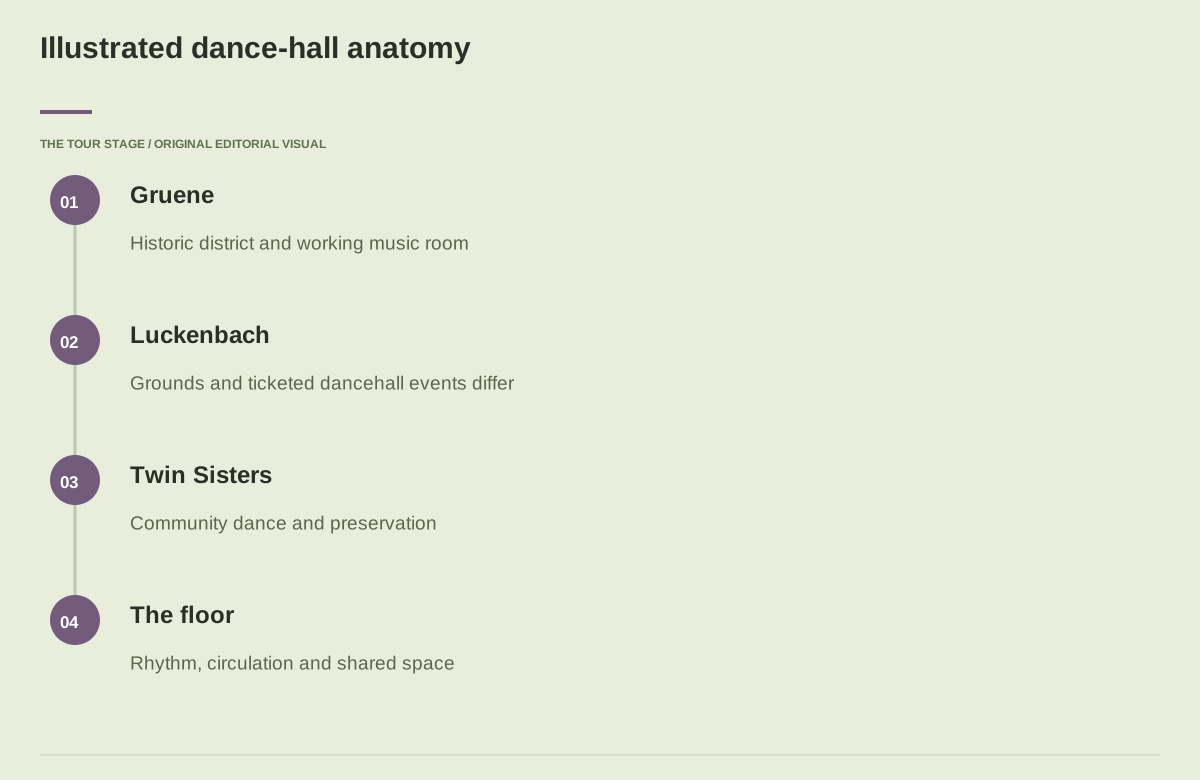
- GrueneHistoric district and working music room
- LuckenbachGrounds and ticketed dancehall events differ
- Twin SistersCommunity dance and preservation
- The floorRhythm, circulation and shared space
Read the visual as text
- GrueneHistoric district and working music room
- LuckenbachGrounds and ticketed dancehall events differ
- Twin SistersCommunity dance and preservation
- The floorRhythm, circulation and shared space
Luckenbach: separate the grounds from the dancehall
Luckenbach’s official site distinguishes its calendar, ticketing and venue policies, which is a useful reminder that visiting the place and attending a particular dancehall show are different plans. A photograph of outdoor musicians cannot tell you the admission arrangements for an evening concert. Treat the site as a working venue rather than a museum tableau. The listening attraction is the way an informal-seeming setting can still depend on disciplined musicianship: bass and drums establish a route, the singer steers the phrasing, and instrumental fills occupy the spaces between lines. When you investigate a booking, look beyond a familiar surname to the actual band and event description. A setting can be famous while the performer deserves to be discovered on their own terms.3
Twin Sisters: community history remains visible
Twin Sisters Dance Hall’s own history and Texas Dance Hall Preservation’s account place community at the centre of the story. These rooms have served social needs as well as commercial entertainment. Volunteer work, maintenance and recurring dances can be as important to survival as a nationally recognised headliner. That changes how to approach a visit: you are joining an existing social occasion, not hiring a stage set for a photograph. Read the particular dance announcement for food, drink, payment and admission arrangements. Do not import another hall’s rules. Where a dance brings regulars and first-time visitors together, a polite question to staff or an experienced dancer will usually teach you more than trying to perform expertise. Leave space for other people’s familiar routines.45
Anatomy of a useful dance tune
Listen for the bass anchoring the harmonic movement and the snare marking a reliable backbeat. A fiddle may carry a melodic hook, but it may also sharpen the rhythm with short attacks. Pedal steel can connect chords with a sustained glide that contrasts with a clipped guitar part. The instruments’ identities matter less than their jobs at a particular moment. On a recorded song by Wolfe or Williams, try tapping the pulse through a vocal pause. If the groove remains legible, you have located the floor’s support system. Next compare a Randy Rogers Band track, noticing how a rougher vocal or stronger rock accent can alter the emotional feel without automatically removing the dance pulse. These are editorial listening observations, not a technical definition imposed on every performance.
Floor etiquette is shared navigation
Before stepping in, watch how the room uses the floor. Moving couples often need an outer lane; stationary dancers should avoid blocking that flow. Local customs vary, so observation comes before confident generalisations about direction or style. Ask before joining a partner, accept a refusal without argument, and keep drinks off the dancing surface. If you are learning, choose a quieter section rather than stopping in a busy lane to discuss a turn. Comfortable footwear that behaves predictably under you matters more than completing a costume. A smooth-looking sole may be too slippery on one floor and useful on another. For mobility or seating needs, contact the venue directly about the actual event setup, accessible toilets, entry route and whether a companion can remain beside the offered position.
Plan a regional trip instead of a hall-collecting race
Gruene, Luckenbach and Twin Sisters are separate destinations. Choose a confirmed show as the anchor, then arrange accommodation and transport around it. Rural roads, late finishes and limited onward transport can matter more than the apparent distance on a map. Build the return journey before the first drink. Check ticket fees, arrival instructions and any food plans using the venue’s own information. A daytime visit and a night dance can reveal different uses of the same place, but do not assume both are available on your date. The Austin room guide adds urban listening alternatives; Stillwater’s Red Dirt story shows how songs travel between communities rather than remaining attached to one building.
Preservation is an ongoing musical activity
An old hall survives through repairs, responsible use and enough people caring about its next dance. Preservation therefore includes the musicians who can hold a room, the volunteers who open it, and audiences willing to buy a ticket for a less famous band. When comparing halls, note the differences rather than searching for the most authentic one. Gruene’s historic district, Luckenbach’s destination identity and Twin Sisters’ community account offer distinct contexts. After a visit, keep one song from the night and revisit it at home. You may hear why the band left space in the arrangement or repeated an instrumental figure. The floor can make those choices audible in a way headphones alone do not. That is the strongest reason to connect history, dancing and attentive listening.
Sources & further reading
- Gruene official historyTown revival and the hall’s preservation context.
- Texas State Historical Association: Gruene HallDocumented historical significance.
- Luckenbach official siteCurrent calendar, tickets and policy entry points.
- Twin Sisters official historyHall history and community role.
- Texas Dance Hall Preservation: Twin SistersPreservation and social context.